



From Gut Feel To Measured Exposure
Instead of guessing your downside, Coinrule turns Risk analytics tools into actions you can automate. Define limits, monitor exposure, and let the engine react when conditions change across connected venues.
See exposure, volatility and drawdowns in one view, then automate rule-based controls across Binance, Kraken, Bybit and Hyperliquid with Coinrule.

410k+
users building rules
1.2M+
strategies executed
20+
Exchanges Supported
Instead of guessing your downside, Coinrule turns Risk analytics tools into actions you can automate. Define limits, monitor exposure, and let the engine react when conditions change across connected venues.
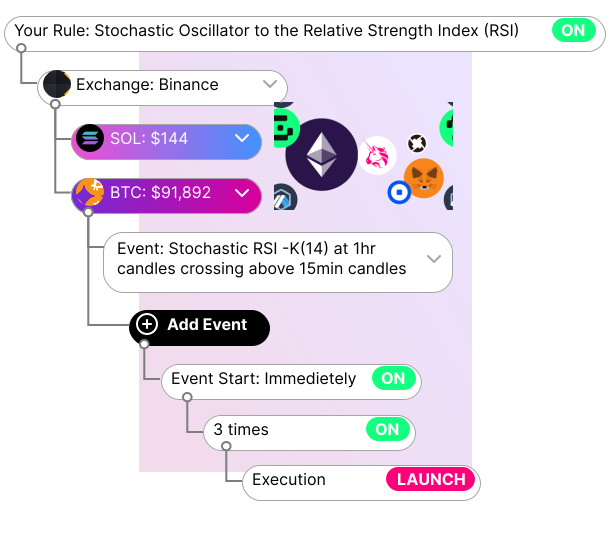
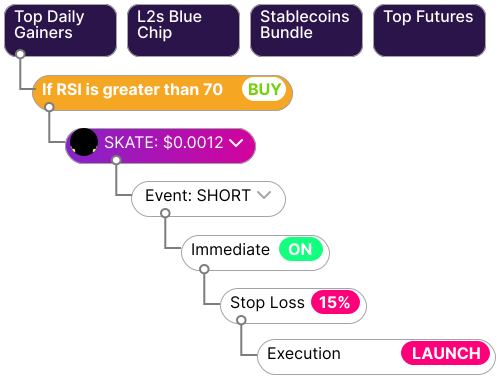
Traders rarely fail from one bad entry, they fail from unmanaged correlation and leverage. Coinrule helps you see concentration by asset, quote currency and strategy, so you know what drives PnL swings. Compare spot and perps exposure side by side and spot hidden overlap between bots. When something looks off, adjust rules in minutes rather than after a drawdown.
On this platform, risk controls are not a spreadsheet, they are executable logic. Set a max position size per coin, a daily loss cap, and a portfolio stop that pauses all bots. For example, if total equity drops 6 percent from the 7-day high, halt new entries and only allow exits. You can also require confirmation like RSI below 30 on 1-hour candles before adding to a losing position.
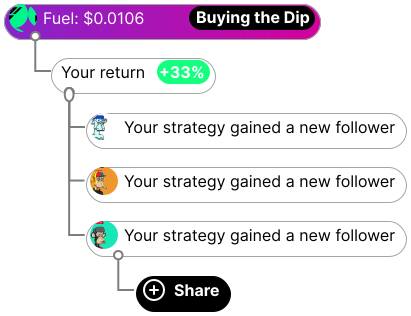
Portfolio Risk Snapshot
Risk is different on perps, so Coinrule keeps leverage, margin usage and liquidation distance visible while your rules run. You might set a hedge rule that reduces exposure when funding turns positive above 0.03 percent and price breaks below the 20-day MA. Another control is to cut leverage from 5x to 2x once unrealized profit exceeds 8 percent, helping protect gains during spikes.
Automated Controls
Connect to Binance, Bybit, Kraken, OKX or Hyperliquid and enforce the same playbook everywhere. The system can pause, throttle or rebalance strategies based on volatility, drawdown or allocation drift without manual intervention.

Volatility Regime Switcher
Switches between trend and mean reversion using ATR expansion. Enters only when volatility is above a threshold. Exits on regime flip or a trailing stop.

Stop Loss and Trailing Take Profit
Sets a fixed stop after entry and trails profit once price moves in your favor. Example: stop at 3 percent, trail after a 5 percent gain. Standardizes exits across bots.

Risk Parity Allocator
Rebalances so each asset contributes similar volatility to the portfolio. Uses periodic checks and target weights. Reduces concentration when one coin becomes too volatile.
Minimum Variance Rebalance
Targets a lower-vol portfolio by shifting weight away from high-variance assets. Rebalances weekly or monthly. Adds guardrails to avoid overtrading in noisy periods.
SPY/VIX Risk Sentinel
Uses a risk-off signal when volatility proxies spike. Reduces exposure when the trigger fires and restores when conditions normalize. Helps avoid trading into panic moves.
Volatility Regime Switcher
Switches between trend and mean reversion using ATR expansion. Enters only when volatility is above a threshold. Exits on regime flip or a trailing stop.
Stop Loss and Trailing Take Profit
Sets a fixed stop after entry and trails profit once price moves in your favor. Example: stop at 3 percent, trail after a 5 percent gain. Standardizes exits across bots.
Risk Parity Allocator
Rebalances so each asset contributes similar volatility to the portfolio. Uses periodic checks and target weights. Reduces concentration when one coin becomes too volatile.
Minimum Variance Rebalance
Targets a lower-vol portfolio by shifting weight away from high-variance assets. Rebalances weekly or monthly. Adds guardrails to avoid overtrading in noisy periods.
SPY/VIX Risk Sentinel
Uses a risk-off signal when volatility proxies spike. Reduces exposure when the trigger fires and restores when conditions normalize. Helps avoid trading into panic moves.
Funding Rate Hedge
Hedges when funding becomes expensive for longs or shorts. Example: if funding is above 0.05 percent, reduce long perps and add spot. Removes the hedge when funding mean reverts.

Portfolio Rebalance
Keeps allocations near targets with threshold bands. Example: rebalance when any asset drifts 4 percent from target. Useful for systematic risk control across cycles.
ADX Trend Strength Filter
Trades only when ADX confirms trend strength above your chosen level. Stays flat when ADX is low to avoid chop. Exits on ADX fade or stop rules.
Mean Reversion with Z-Score
Buys when price deviates below a moving average by a set Z-score. Sells when it reverts to the mean. Adds a time stop to limit capital tie-up.

Volatility Targeted Trend
Sizes positions to target a consistent volatility level. Increases size in calm markets and reduces in fast markets. Exits on trend breaks or volatility spikes.
Unlike basic dashboards, Coinrule lets you validate how a rule behaves under different volatility regimes. Run a small allocation first, then scale once logs show stable behavior. Start with 2 percent of balance per entry, then increase to 5 percent after 30 completed trades. This keeps experimentation from turning into accidental leverage.
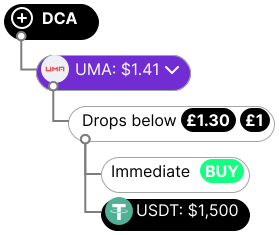
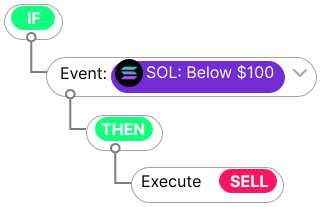
These controls matter most when they trigger automatic protection, not just alerts. Set a rule like: if portfolio drawdown hits 4 percent in 24 hours, cancel open orders, close perps, and pause new entries for 12 hours. Add a second condition to resume only when price recovers above the 50-period MA on 4-hour candles. That kind of circuit breaker is hard to run manually across multiple exchanges.
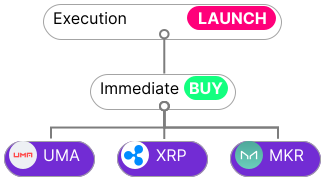
Every bot can follow the same sizing policy so exposure stays predictable. Use fixed percent sizing, volatility-based sizing, or caps per asset. For instance, limit any single altcoin to 8 percent of total equity, while BTC and ETH can reach 25 percent combined. When a rule tries to exceed the cap, the system simply does not place the order.



After you connect accounts, Coinrule becomes the control plane for your strategies. Run the same logic on spot and perps, then compare results without switching tabs. Logs show what triggered, what was sent, and what filled. That audit trail makes it easier to refine rules and avoid repeating mistakes.
Build StrategyFAQ
 Lars H.
 Priya K.
 Emma T.
 Diego R.
 Yuki T.
 Michael R.
Start with three layers: position sizing, exits and portfolio stops. Add a stop loss and a trailing take profit, then cap exposure per asset. Finish with a daily drawdown rule that pauses new entries. This creates a baseline you can trust before adding complexity.

When markets turn noisy, fewer trades can be better trades. Add an ATR or ADX filter so entries only happen when conditions match your edge. Example: trade breakouts only if ATR is up 20 percent versus the prior week. That keeps bots from firing in low-quality ranges.


Correlation often rises when fear hits, so diversification can vanish. Use a rule that reduces alt exposure when BTC dominance rises by 2 percent in 48 hours. Or hedge perps when funding becomes one-sided. The goal is to stay solvent first, then opportunistic.

Rebalancing is not just about returns, it is about keeping any one asset from dominating. Set thresholds like 4 percent drift before trading to reduce churn. Schedule checks weekly to match your horizon. Over time, this keeps risk closer to your plan.

Treat every strategy like a product release. Review triggers, slippage and missed fills, then adjust one variable at a time. If a rule set performs well for 50 trades, increase size gradually. Consistency comes from process, not prediction.
Explore ready-made templates for trend, mean reversion, hedging and rebalancing, then adapt them to your limits. For deeper automation patterns, see /automated-trading and /crypto-trading-bot. Keep your setup simple, measurable and repeatable.
Compare Plans