



From Ideas To Automated Orders
Instead of reacting to headlines, Stock market AI on Coinrule turns your plan into rules that place orders automatically. Set entries, exits and position sizing, then let the engine run with clear logs and alerts.
Build rule-based stock and ETF automation with Stock market AI. Backtest ideas, manage risk, and execute through brokers like WeBull, Alpaca and E*TRADE.

410k+
users building rules
1M+
strategies created
10+
Brokers Connected
Instead of reacting to headlines, Stock market AI on Coinrule turns your plan into rules that place orders automatically. Set entries, exits and position sizing, then let the engine run with clear logs and alerts.
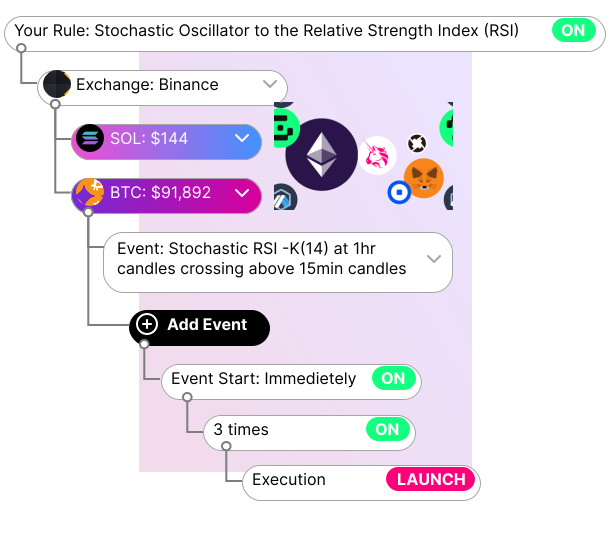
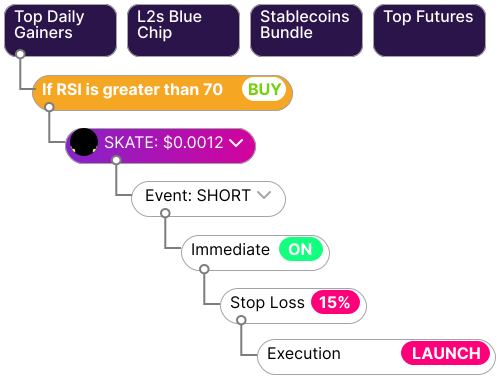
Traders often want automation that stays transparent. Coinrule lets you combine indicators like RSI, moving averages and volatility filters without code. You can define conditions such as RSI below 30 on 1-hour candles, then buy a fixed dollar amount or a percent of available cash. Because rules are explicit, you can review every trigger and adjust calmly after market hours.
On this platform you can route stock and ETF orders through Alpaca, Robinhood, Trading212, WeBull and Tradier. Keep a single dashboard for multiple accounts and strategies. Switch a rule from paper testing to live execution when you are ready, without rebuilding the logic. Notifications keep you informed when orders fill or when a condition is close to triggering.
Risk Controls First
Risk controls include max daily trades, per-position caps and portfolio exposure limits. For example, you can stop new buys if drawdown hits 6% in a week, or if a single ticker exceeds 12% of equity. Add time windows so rules only run during regular hours, or avoid the first 5 minutes after the open. These constraints help keep automation disciplined when volatility spikes.
Templates You Can Customize
Start from proven templates, then tune thresholds, timeframes and sizing to match your risk profile. Clone a strategy for a different ticker, or run the same logic across a watchlist with separate limits per symbol.

Buy the Dips
Buys after a 5% drop from the 20-day high and volume holds above its 20-day average. Adds once per day to reduce churn. Exits on a 6% rebound or a 10-day time stop.
MA Crossover with Volume Filter
Enters when MA20 crosses above MA50 and volume is 1.2x the 20-day average. Exits when the cross reverses or price closes 3% below MA50. Best on daily charts.

Stop Loss and Trailing Take Profit
Sets an initial stop at 2.5% and activates a trailing take profit after a 4% gain. Trails by 1.5% to lock in trends. Adds a 2-hour cooldown before re-entry.
Opening Range Breakout
Defines the first 15-minute high and low after the open. Buys on a break above the range with a 0.3% buffer. Exits at 1.5R or if price falls back into the range.
Portfolio Rebalance
Rebalances weekly to target weights like 60% SPY, 30% QQQ and 10% TLT. Skips trades if drift is under 1% to reduce fees. Caps turnover per rebalance.
Buy the Dips
Buys after a 5% drop from the 20-day high and volume holds above its 20-day average. Adds once per day to reduce churn. Exits on a 6% rebound or a 10-day time stop.
MA Crossover with Volume Filter
Enters when MA20 crosses above MA50 and volume is 1.2x the 20-day average. Exits when the cross reverses or price closes 3% below MA50. Best on daily charts.
Stop Loss and Trailing Take Profit
Sets an initial stop at 2.5% and activates a trailing take profit after a 4% gain. Trails by 1.5% to lock in trends. Adds a 2-hour cooldown before re-entry.
Opening Range Breakout
Defines the first 15-minute high and low after the open. Buys on a break above the range with a 0.3% buffer. Exits at 1.5R or if price falls back into the range.
Portfolio Rebalance
Rebalances weekly to target weights like 60% SPY, 30% QQQ and 10% TLT. Skips trades if drift is under 1% to reduce fees. Caps turnover per rebalance.

Volatility Regime Switcher
Uses ATR and a volatility proxy to shift between trend and defensive rules. If ATR rises 20% above its 30-day average, cuts position size in half. Restores size when volatility normalizes.

Support and Resistance Bounce
Buys near a defined support zone when price is within 0.5% and RSI is below 40. Places a stop 1.8% under support. Takes profit at the next resistance or after 3 days.
Mean Reversion with Z-Score
Calculates a rolling z-score on returns and buys when the z-score is below -2.0. Sells when it mean reverts to 0.0 or hits a 2% stop. Works best in ranges.
ADX Trend Strength Filter
Trades breakouts only when ADX is above 25 to confirm trend strength. Enters on a 20-day Donchian high and exits on a 10-day low. Skips choppy periods with the filter.
Minimum Variance Rebalance
Allocates across a basket and rebalances monthly toward lower-volatility weights. Reduces exposure when a name's 30-day volatility spikes. Keeps a small cash buffer to limit forced selling.
Unlike black-box tools, Coinrule lets you test rules on historical data and see how each condition affected entries and exits. You can compare two versions of the same idea and measure drawdown and trade frequency. Once results look reasonable, move to small sizing and scale gradually.
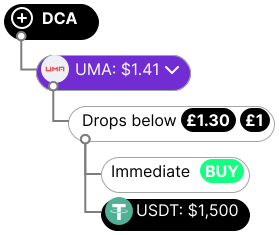
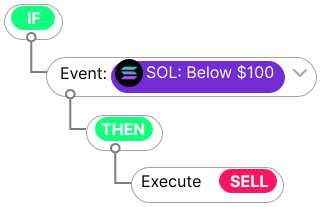
Rules can combine multiple checks so you do not trade on one signal alone. A practical setup is: buy when RSI drops below 32, price is above MA200 and the daily candle is down at least 1.5%. Another is: sell half at 8% profit, then trail the rest by 2% to stay in strong moves.
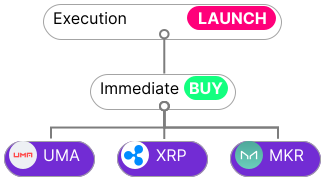
When you cannot watch the screen, scheduled execution keeps your plan consistent. Run a weekly DCA into an ETF every Monday at 10:30, or pause all new entries during earnings week for a specific ticker. You can also add a time stop, such as closing any position still open after 14 trading days. This keeps the system aligned with your time horizon.



Every bot has an audit trail with triggers, orders and outcomes. Set alerts for fills, missed conditions and unusual volatility. If the market changes, pause a single rule or stop everything with one action.
Start TradingFAQ
 Sophie M.
 Marco P.
 Priya K.
 James W.
 Yuki T.
 Amara N.
Separate research from execution so you do not change the plan mid-trade. Use watchlists, templates and backtests to narrow ideas. Then let the engine handle order placement, sizing and exits.

Try a simple trend rule on a liquid ETF: buy when MA50 is above MA200 and price pulls back 2%, then exit on a close below MA50. Or run a monthly rebalance that restores target weights when drift exceeds 2%.


Automation should not mean constant trading. Add minimum move thresholds, drift bands and cooldown timers. For example, only rebalance if an allocation is off by more than 1.5%, or only allow one entry per symbol per day.

Performance comes from understanding behavior under stress. Review which conditions triggered most often, which exits protected downside and where slippage appeared. Use that feedback to simplify rules and remove fragile signals.

Templates give you a starting point, not a final answer. Clone a strategy, change one variable and compare outcomes. Over a few cycles you will build a library of rules that match your style.
Connect a supported broker, pick a template and set your risk limits before going live. Start with one ticker or one ETF, then expand once you trust the workflow. Coinrule keeps execution systematic and easy to supervise.
Create Strategy