



Start with structure, not noise
Stock Trading For Beginners gets easier when your plan is explicit and repeatable. Start with simple rules for entries, exits and sizing, then test in demo before you go live on stocks and ETFs via Alpaca.
Learn Stock Trading For Beginners with simple templates: test in demo, then automate basic entries, exits and rebalancing for stocks and ETFs via Alpaca, with clear limits.

420k+
users learning systems
900k+
demo runs completed
Templates
for common setups
Stock Trading For Beginners gets easier when your plan is explicit and repeatable. Start with simple rules for entries, exits and sizing, then test in demo before you go live on stocks and ETFs via Alpaca.
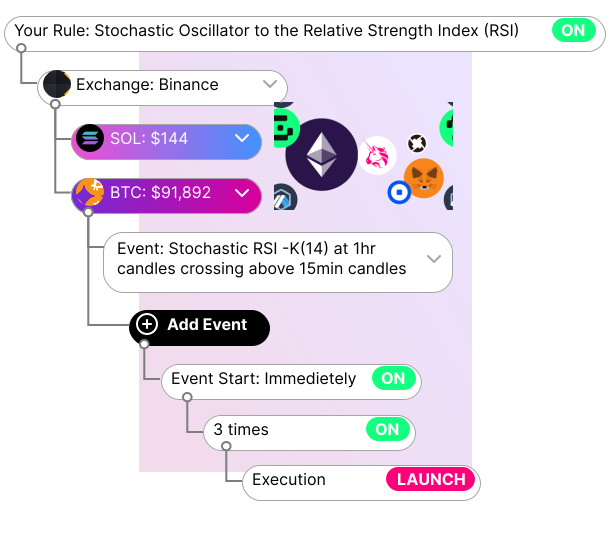
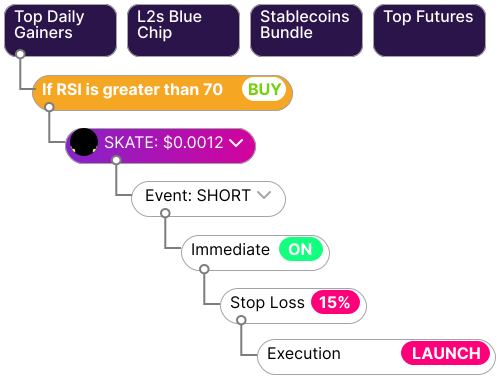
Begin with proven building blocks like trend filters, profit targets, and time-based rebalancing. You can read each condition, understand the intent, and change one variable at a time as you learn.
Use position limits, stop-loss logic, and exposure caps so one idea cannot dominate your account. Guardrails keep mistakes small while you build confidence with a consistent process.
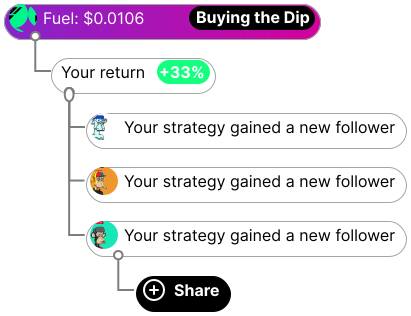
Demo first, then live
Run your rules in demo to see how they behave through gaps and choppy days. When the results look sensible, switch the same structure to live and keep reviewing outcomes on a schedule.
Learn the workflow
As you improve, add one tool at a time: alerts, rebalancing, then portfolio constraints. For more, see /stock-market-trading and /stock-trading-tools.

Moving Averages-Based Rebalancing
Rebalance a simple two-ETF portfolio monthly to target weights. Add a small drift threshold so you do not trade too often. A beginner-friendly way to learn allocation and discipline.

Golden Cross Trading
Buy when the 50-day MA crosses above the 200-day MA on a broad ETF. Exit on the reverse cross or a trailing stop. A classic trend filter that is easy to follow.

Optimised RSI and MA Strategy
Buy when RSI dips below 35 while price holds above a long-term MA. Scale out as RSI recovers. Combines a simple trend check with a clear oversold signal.

MFI Oversold and Overbought
Buy when MFI signals capitulation and sell when MFI becomes overbought. Add a time stop to exit if momentum stalls. Helps beginners avoid holding forever without a plan.
Dip Recovery TWAP & RSI
Scale in using TWAP after an oversold signal, then exit as RSI normalizes. Add a volatility filter to avoid news spikes. Teaches smoother entries and explicit exits.
Moving Averages-Based Rebalancing
Rebalance a simple two-ETF portfolio monthly to target weights. Add a small drift threshold so you do not trade too often. A beginner-friendly way to learn allocation and discipline.
Golden Cross Trading
Buy when the 50-day MA crosses above the 200-day MA on a broad ETF. Exit on the reverse cross or a trailing stop. A classic trend filter that is easy to follow.
Optimised RSI and MA Strategy
Buy when RSI dips below 35 while price holds above a long-term MA. Scale out as RSI recovers. Combines a simple trend check with a clear oversold signal.
MFI Oversold and Overbought
Buy when MFI signals capitulation and sell when MFI becomes overbought. Add a time stop to exit if momentum stalls. Helps beginners avoid holding forever without a plan.
Dip Recovery TWAP & RSI
Scale in using TWAP after an oversold signal, then exit as RSI normalizes. Add a volatility filter to avoid news spikes. Teaches smoother entries and explicit exits.
Grid Trading In Range
Run a grid only while price stays inside defined support and resistance. Pause if trend indicators flip. Helps beginners avoid forcing a range strategy into a trend.
Ichimoku Cloud with MACD
Enter when Ichimoku and MACD align bullish on a daily chart. Exit on cloud breakdown or profit target. Adds structure and avoids trading against the broader context.
Multi-Index Momentum Strategy
Rotate small weights toward stronger sectors based on relative strength. Rebalance weekly with exposure caps. A simple introduction to momentum without overcomplication.
Every Day Buy The Best + Stop Loss And Take Profit
Each day, allocate to the strongest ETF in your list, then attach stop-loss and take-profit rules. Re-evaluate daily with exposure caps. Keeps the process consistent and teachable.
EMA Cross Under Strategy
Enter when an EMA cross under signals weakness and reduce exposure. Re-enter only when conditions recover. A protective rule that helps beginners learn when to step back.
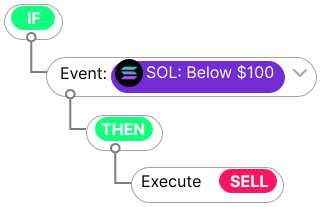
A beginner plan should be understandable: one trend filter, one entry trigger, and a clear exit. Boring rules are easier to follow, measure, and improve without overfitting.
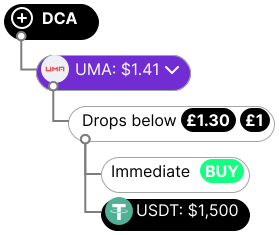
Run a template in demo, observe behavior, then adjust one threshold. That feedback loop is the fastest way to learn without turning every lesson into a real loss.
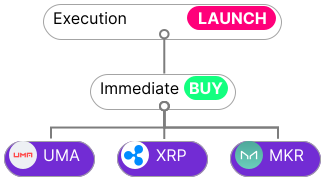
Use schedules for reviews, limits for risk, and logs for learning. When habits are systematized, you improve steadily instead of restarting every time the market changes.



Start with broad ETFs and small position sizes, then add a second sleeve only after you can explain your rules. Diversification helps, but only if you can manage it consistently.
Try FreeFAQ
 Hiroshi Y.
 Amara N.
 Elias
Elias Zir K.
 Sebastian
 Brandon S.
If you cannot explain a rule in one sentence, simplify it. Clear rules are easier to follow when markets move fast.

Even good strategies have losing streaks. Use sizing and limits so you can stay consistent long enough to learn what actually works for you.


News can push prices around, but your rules should stay stable. If you change logic every day, you will never know what caused results.

Decide your stop and target before you enter. Automation enforces the plan when emotions show up.

Add one tool at a time: alerts, then rebalancing, then portfolio constraints. Slow upgrades reduce confusion and improve learning.
Pick one workflow, run it for a month, and review once a week. Consistency creates better lessons than constantly switching strategies.
Compare Plans