



Manage many bots like one portfolio
Trading Bots work best when you treat them like a portfolio, not isolated experiments. Run multiple rule sets, cap total exposure, and review results with logs so iteration stays measurable.
Use Trading Bots to run multiple strategies at once: templates for dips, grids and trends, plus portfolio limits, logs and controls across Binance, Bybit and OKX.

370k+
traders running automation
1.2M+
strategies executed
1,000+
trading pairs
Trading Bots work best when you treat them like a portfolio, not isolated experiments. Run multiple rule sets, cap total exposure, and review results with logs so iteration stays measurable.
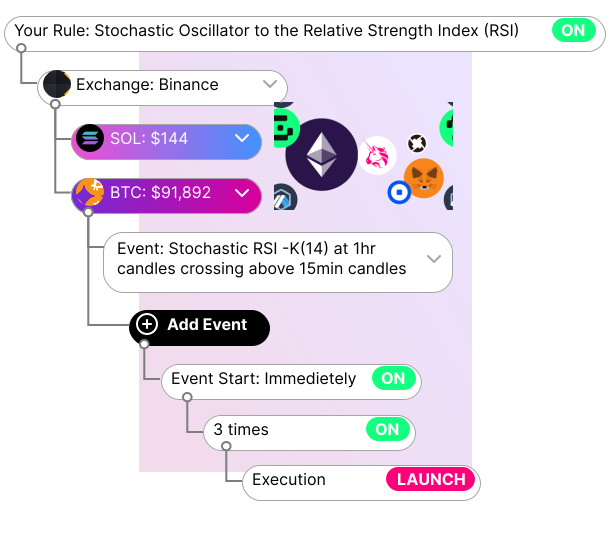
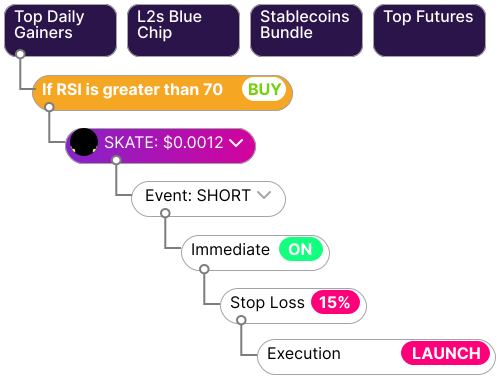
Start from templates for buying dips, range grids, trend filters, and rebalancing. Then adapt thresholds and sizing so each bot has a clear role and timeframe.
When several bots trade the same assets, overlap can quietly increase risk. Use allocation bands, maximum concurrent positions, and cooldowns to keep automation coordinated.
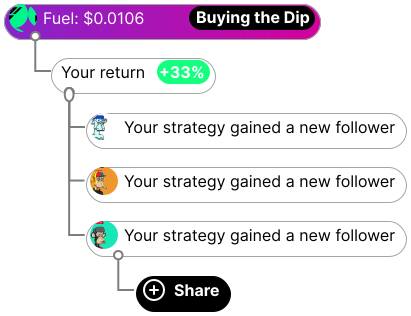
Portfolio-level guardrails
Set caps on exposure, trade frequency, and drawdown responses so the system stays disciplined. Pause one bot or pause all bots without losing your rule history.
Review and improve
Version your rules, change one variable, and compare outcomes across regimes. For related pages, see /bot-trading and /trading-robot.

Buy the Dips
Buy on a controlled pullback and take profit at preset levels. Use cooldowns to avoid repeated entries during chop. A simple template for accumulation bots.
Grid Trading In Range
Run a grid only while price stays inside support and resistance. Pause if trend indicators flip. Keeps range logic from fighting a breakout.

Moving Averages-Based Rebalancing
Rebalance a multi-coin portfolio to target weights on a schedule. Add drift thresholds so you do not overtrade. Good for long-term bot portfolios.

MFI Oversold and Overbought
Buy when MFI signals capitulation and sell when MFI becomes overbought. Add a time stop if momentum stalls. A straightforward signal loop for one sleeve.
Dip Recovery TWAP & RSI
Scale in using TWAP after an oversold signal, then exit as RSI normalizes. Add a volatility filter to avoid news spikes. Smooths entries across bots.
Buy the Dips
Buy on a controlled pullback and take profit at preset levels. Use cooldowns to avoid repeated entries during chop. A simple template for accumulation bots.
Grid Trading In Range
Run a grid only while price stays inside support and resistance. Pause if trend indicators flip. Keeps range logic from fighting a breakout.
Moving Averages-Based Rebalancing
Rebalance a multi-coin portfolio to target weights on a schedule. Add drift thresholds so you do not overtrade. Good for long-term bot portfolios.
MFI Oversold and Overbought
Buy when MFI signals capitulation and sell when MFI becomes overbought. Add a time stop if momentum stalls. A straightforward signal loop for one sleeve.
Dip Recovery TWAP & RSI
Scale in using TWAP after an oversold signal, then exit as RSI normalizes. Add a volatility filter to avoid news spikes. Smooths entries across bots.
Ichimoku Cloud with RSI
Enter when price is above the cloud and RSI supports momentum. Exit on cloud breakdown or target. Helps keep a trend bot aligned with context.
Ichimoku Cloud with MACD
Enter when Ichimoku and MACD align bullish, then exit on cloud breakdown. Add risk caps. A structured momentum bot for portfolio use.
EMA Cross Under Strategy
Reduce exposure when an EMA cross under signals weakness. Re-enter only when conditions recover. A defensive bot for drawdown control.

Every Day Buy The Best + Stop Loss And Take Profit
Each day, allocate to the strongest asset in your list, then attach stop-loss and take-profit rules. Re-evaluate daily with exposure caps. Keeps selection systematic.
Golden Cross Trading
Buy when the 50-day MA crosses above the 200-day MA, and exit on the reverse cross. Add a stop for protection. A classic trend filter for a core bot.
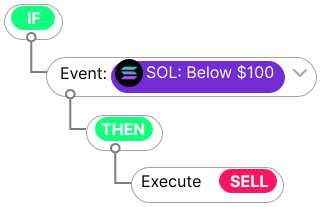
More bots can mean more noise unless you add structure. Use portfolio limits, cooldowns, and clear exits so the system stays controlled even when many strategies run at once.
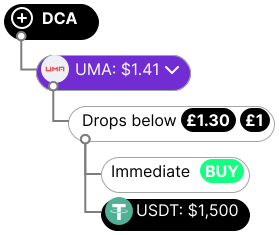
Define triggers, define exits, then let the system monitor continuously. You get consistency without staring at charts, plus a record of each action for review.
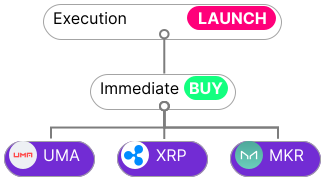
Allocation bands and scheduled rebalances keep portfolios aligned with your intent. This is especially useful when multiple strategies run across the same assets.



Save versions, change one variable, and compare results. Trading Bots improve faster when iteration is measured, not random.
Compare PlansFAQ
 Lars H.
 Yuki T.
 Amara N.
 Elias M.
 Ethan
Ethan Alex
Alex
Decide how often rules should check: faster for active setups, slower for calmer investing. Keep the cadence stable so results are comparable.

Keep conditions simple: one filter, one trigger, one exit plan. Too many signals can create fragility and constant tweaking.


If you cannot explain your maximum risk, add limits until you can. Constraints make automation easier to trust.

Pause bots during major news, then resume when volatility settles. You keep control without rewriting your strategy.

Review logs weekly and change one variable. Routine improvements beat reactive edits after one trade.
Launch one template first, then expand to more bots after review. Gradual scaling keeps automation understandable and manageable.
Start Free