



Start with the right foundations
How to Buy Crypto is easier when you separate setup from execution. Choose a venue, decide order types, define risk limits, then automate repeatable entries and exits so you do not improvise.
Use How to Buy Crypto as a repeatable checklist: choose an exchange, set risk limits, then automate rule-based entries and exits with alerts and transparent logs.

420k+
traders using Coinrule
1.6M+
strategies executed
8+
exchanges supported
How to Buy Crypto is easier when you separate setup from execution. Choose a venue, decide order types, define risk limits, then automate repeatable entries and exits so you do not improvise.
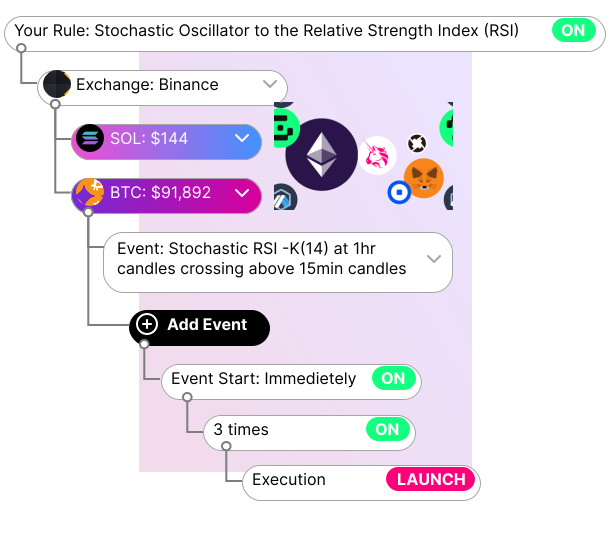
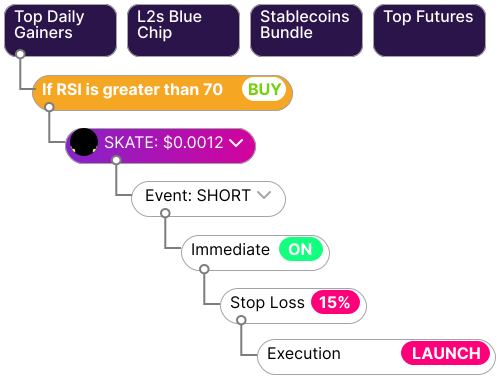
Use limit orders and staged entries to avoid emotional fills. Add stop rules and exposure caps so one trade cannot dominate your portfolio.
Coinrule is non-custodial: funds stay on your exchange and you control API permissions. You can pause rules any time and keep full visibility through logs and alerts.
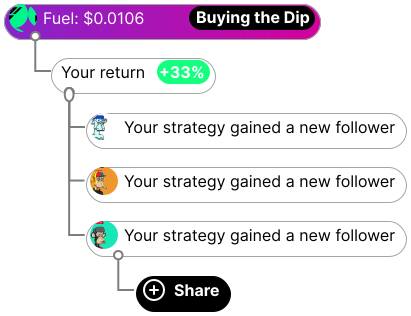
Safety and control
Set maximum position size, maximum daily trades, and cooldowns. These guardrails help prevent overtrading when markets move quickly.
A routine you can keep
Start in demo, then go live once the workflow is clear. For related pages, see /how-to-buy-crypto and /bitcoin-bot.

Buy + Stop Loss And Take Profit
Attach stop-loss and take-profit rules immediately after entry. Cancel if conditions change. A simple framework for buying with defined risk.

Optimised RSI and MA Strategy
Buy when RSI is oversold while price stays above a long-term MA, then scale out on recovery. Add exposure caps. Keeps entries selective and reviewable.

Low Volatility Buy And Sell
Reduce activity when volatility rises and spreads get noisy. Resume when conditions normalize. Helps prevent rushing buys during unstable sessions.

Grid Trading In Range
Only run range logic while price stays inside support and resistance. Pause if trend filters flip. Useful for staged buying in sideways markets.
Moving Average Scalper
Use short-term moving averages to capture quick swings, then take profit fast with a tight stop. Built for clear rules, not prediction.
Buy + Stop Loss And Take Profit
Attach stop-loss and take-profit rules immediately after entry. Cancel if conditions change. A simple framework for buying with defined risk.
Optimised RSI and MA Strategy
Buy when RSI is oversold while price stays above a long-term MA, then scale out on recovery. Add exposure caps. Keeps entries selective and reviewable.
Low Volatility Buy And Sell
Reduce activity when volatility rises and spreads get noisy. Resume when conditions normalize. Helps prevent rushing buys during unstable sessions.
Grid Trading In Range
Only run range logic while price stays inside support and resistance. Pause if trend filters flip. Useful for staged buying in sideways markets.
Moving Average Scalper
Use short-term moving averages to capture quick swings, then take profit fast with a tight stop. Built for clear rules, not prediction.
Maximized RSI Strategy
Buy when RSI crosses up from oversold and confirm with a higher low. Take partial profits at preset levels. A clean entry template for beginners.

EMA Cross Under Strategy
Reduce exposure when an EMA cross under signals weakness. Re-enter only when conditions recover. Helps avoid buying into momentum fades.
Ichimoku Cloud with RSI
Enter when price is above the cloud and RSI supports strength. Exit on cloud breakdown. Adds context so buys are not purely impulsive.
Ichimoku Cloud with MACD
Enter when Ichimoku and MACD align, then exit on breakdown. Use strict sizing. A structured template for trend-following entries.
Bollinger Band Below Price with RSI
Combine Bollinger band signals with RSI confirmation and a stop. Add a cooldown. A disciplined way to buy dips without overtrading.
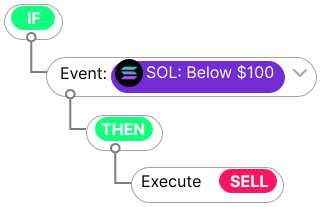
Decide entry conditions, exit conditions, and maximum risk before placing orders. A simple plan prevents emotional buying during spikes.
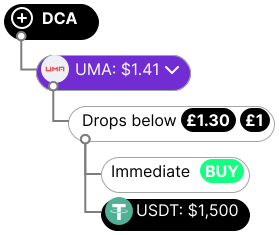
Use limit orders and staged entries to improve consistency. Combine this with alerts so you do not need to stare at charts all day.
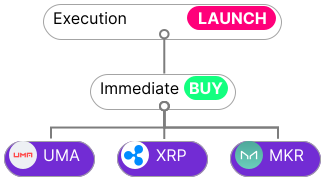
Logs and version history help you learn from outcomes. Change one variable at a time so improvements are measurable.



During major news, volatility can break normal behavior. Pause automation and resume once spreads tighten and signals stabilize.
Build BotFAQ
 Noor H.
 Rafael C.
 Keiko F.
 Sanjay P.
 Yara M.
 Ibrahim Z.
Decide how often rules should check: faster for active setups, slower for calmer investing. Keep cadence stable so results are comparable.

Keep conditions simple: one filter, one trigger, one exit plan. Too many signals can create fragility and constant tweaking.


If you cannot explain your maximum risk, add limits until you can. Constraints make automation easier to trust.

Pause automation during major news, then resume when volatility settles. You keep control without rewriting your strategy.

Review logs weekly and change one variable. Routine improvements beat reactive edits after one trade.
Launch one rule first, then expand after review. Gradual scaling keeps execution understandable and manageable.
Start Now