

Tools that connect research to action
Stock Trading Tools work best when they reduce decisions at the moment you are most biased. Coinrule lets you define what you will do in advance, then executes and notifies you with a clear audit trail.
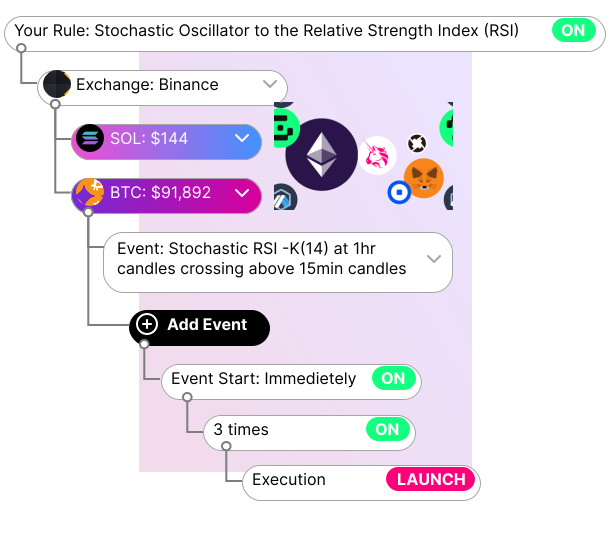
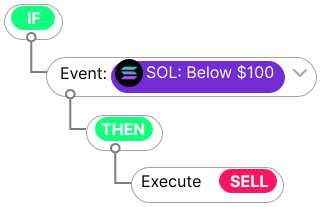
Use Stock Trading Tools to turn signals into rules: alerts, indicator triggers, scheduled checks and automated orders for stocks and ETFs via Alpaca.

370k+
traders tracking portfolios
950k+
alerts configured
100+
rule conditions
Stock Trading Tools work best when they reduce decisions at the moment you are most biased. Coinrule lets you define what you will do in advance, then executes and notifies you with a clear audit trail.
Set alerts on price moves, indicator levels, gaps, and time windows so you only check the market when something meaningful happens. Combine signals with filters like liquidity, trend direction, or portfolio exposure before an order is allowed.
Use templates to start fast, then customize entries, exits and sizing. Backtest in demo, adjust thresholds, and keep versions of your rules so you can compare performance across regimes.
Execution without spreadsheet glue
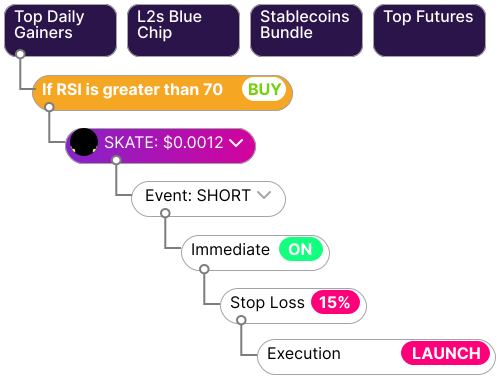
Schedule checks, rebalance baskets, and cap risk with stop logic that runs even when you are offline. For more workflows, see /best-stock-app and /stock-trading-app.
Visibility across positions
Dashboards summarize exposure, winners and laggards, and what your rules did today. You keep control, while the system handles the repetitive monitoring and triggering.
Grid Trading
Create a range for a liquid ETF and place staggered buys below and sells above. Tighten the grid when volatility drops. A structured approach for sideways markets.
Grid Trading In Range
Run a grid only when price stays within defined support and resistance. Pause the bot if trend indicators flip. Helps avoid forcing range logic into trending weeks.
Maximized RSI Strategy
Buy when RSI(14) crosses up from oversold and confirm with a higher low. Take partial profits at preset levels. Keeps mean-reversion entries disciplined and repeatable.
EMA Crossings with RSI
Enter on an EMA cross with RSI confirmation to avoid weak signals. Exit on crossback or trailing stop. Designed for cleaner trend participation with fewer false starts.
MFI Oversold and Overbought
Buy when MFI signals capitulation and sell when MFI becomes overbought. Add a time stop to exit if momentum stalls. Useful for spotting exhaustion moves in liquid names.
Grid Trading
Create a range for a liquid ETF and place staggered buys below and sells above. Tighten the grid when volatility drops. A structured approach for sideways markets.
Grid Trading In Range
Run a grid only when price stays within defined support and resistance. Pause the bot if trend indicators flip. Helps avoid forcing range logic into trending weeks.
Maximized RSI Strategy
Buy when RSI(14) crosses up from oversold and confirm with a higher low. Take partial profits at preset levels. Keeps mean-reversion entries disciplined and repeatable.
EMA Crossings with RSI
Enter on an EMA cross with RSI confirmation to avoid weak signals. Exit on crossback or trailing stop. Designed for cleaner trend participation with fewer false starts.
MFI Oversold and Overbought
Buy when MFI signals capitulation and sell when MFI becomes overbought. Add a time stop to exit if momentum stalls. Useful for spotting exhaustion moves in liquid names.
Moving Average Scalper
Use short-term moving averages to capture quick swings on highly liquid ETFs. Take profit quickly and enforce a tight stop. Built for speed, not prediction.
Dip Recovery TWAP & RSI
Scale in using TWAP after an oversold signal, then exit as RSI normalizes. Add a volatility filter to avoid news spikes. Smooths entries while keeping exits explicit.
Ichimoku Cloud with RSI
Enter when price is above the cloud and RSI supports strength. Exit on cloud breakdown or profit target. A tool-driven way to combine trend context and momentum.
EMA with MACD with Trailing Stop Loss
Trigger entries when EMA and MACD align, then protect gains with a trailing stop. Reduce size when volatility rises. Helps keep risk proportional to market conditions.
Every Day Buy The Best + Stop Loss And Take Profit
Each day, allocate to the strongest ETF in your list, then attach stop-loss and take-profit rules. Re-evaluate daily with exposure caps. Keeps selection systematic and controlled.
Before you act, combine indicators, time filters and liquidity checks to reduce false positives. This turns noisy alerts into fewer, higher-quality decisions you can execute consistently.
Start from a proven structure, then adapt the thresholds to your market and timeframe. Save versions, compare outcomes, and keep improvements deliberate rather than random.
See allocations, concentration, and drawdown at a glance, then update rules to match the risk you want. Good tools show tradeoffs clearly so changes are intentional.


Attach exits automatically, prevent duplicate entries, and enforce cooldown periods after a stop. Stock Trading Tools should remove operational errors, not just provide more signals.
Start BuildingFAQ

Pick one momentum signal and one trend filter, then define exits first. Tools are most powerful when they make a simple plan easier to follow, not when they add complexity.

If you always confirm the same conditions, convert that checklist into a rule. You reduce missed steps and keep decision quality consistent when you are tired or distracted.

Rules should behave sensibly when the market gaps or chops. Add time stops, exposure caps and cooldowns so one rough session does not cascade into overtrading.
Review results on a schedule, not after every trade. When you iterate calmly, you make fewer emotional changes and learn faster from consistent data.
Maintain a few templates for different regimes: range, trend and high-volatility. Switch deliberately when conditions change instead of forcing one setup everywhere.
Launch with alerts and one automated exit rule, then expand to entries and rebalancing after you are comfortable. A staged rollout keeps strategies understandable and manageable.
Learn More