



Automate Uniswap without giving up custody
A Uniswap Trading Bot should not require handing over your funds. Coinrule uses SAFE smart accounts so you stay self-custodial while your rules execute on-chain with clear logs and risk limits.
Automate Uniswap strategies with self-custody: run on-chain rules via SAFE smart accounts, session keys and Li.fi routing across Base and Arbitrum with clear limits.

410k+
users building automation
1.4M+
on-chain checks run
Base
and Arbitrum live
A Uniswap Trading Bot should not require handing over your funds. Coinrule uses SAFE smart accounts so you stay self-custodial while your rules execute on-chain with clear logs and risk limits.
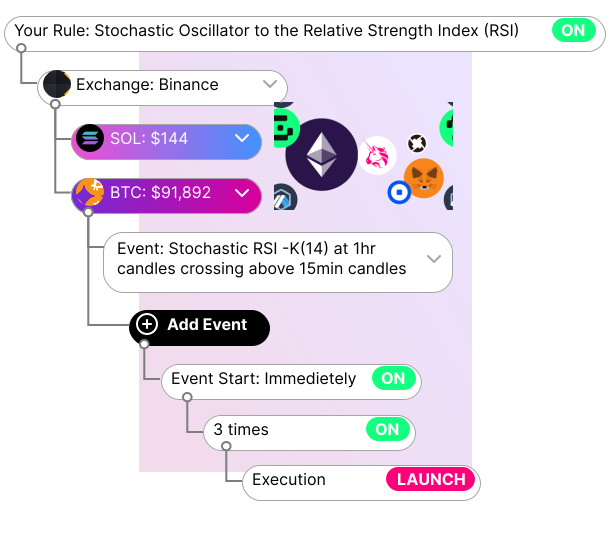
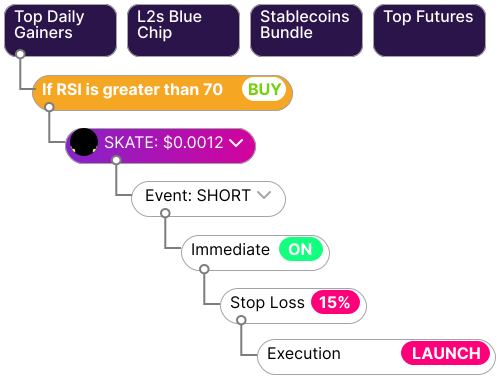
On-chain execution is only as good as routing. Trades route via Li.fi to search liquidity across pools and venues, so your rules aim for efficient execution rather than manual swapping.
Use session keys to grant limited permissions for specific actions and time windows. This reduces operational risk while still letting strategies run continuously across market hours.
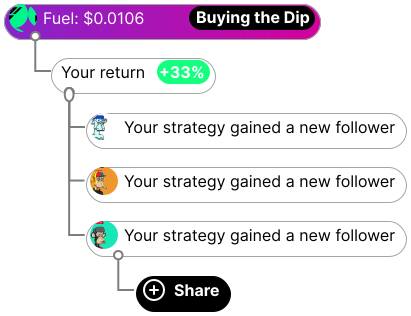
Guardrails for DeFi
Set caps on spend, slippage, and frequency, plus cooldown windows after volatility spikes. You can pause rules fast and keep a clear record of every trigger and swap.
A rule engine for Uniswap
Build conditions using price, indicators, and timing, then chain actions like swap, rebalance, or take profit. For related pages, see /defi-trading and /uniswap-trading-bot.

Buy the Dips
Accumulate into a token when price pulls back and liquidity is stable. Add a take-profit and cooldown window. Designed to keep Uniswap entries disciplined during volatility.

Grid Trading
Run a grid on a liquid pair and rebalance when price oscillates inside a range. Pause if trend filters flip. Useful for sideways markets with clear risk caps.

Bollinger Band Below Price with RSI
Buy near the lower band when RSI confirms oversold and exit at the mid-band or target. Add slippage and spend limits. A structured mean-reversion approach on-chain.
Dip Recovery TWAP & RSI
Scale in using TWAP after an oversold signal, then exit as RSI normalizes. Add a volatility filter to avoid news spikes. Smooths entries while keeping exits explicit.

Ichimoku Cloud with RSI
Enter when price is above the cloud and RSI supports momentum. Exit on cloud breakdown or profit target. Adds trend context so swaps follow the bigger move.
Buy the Dips
Accumulate into a token when price pulls back and liquidity is stable. Add a take-profit and cooldown window. Designed to keep Uniswap entries disciplined during volatility.
Grid Trading
Run a grid on a liquid pair and rebalance when price oscillates inside a range. Pause if trend filters flip. Useful for sideways markets with clear risk caps.
Bollinger Band Below Price with RSI
Buy near the lower band when RSI confirms oversold and exit at the mid-band or target. Add slippage and spend limits. A structured mean-reversion approach on-chain.
Dip Recovery TWAP & RSI
Scale in using TWAP after an oversold signal, then exit as RSI normalizes. Add a volatility filter to avoid news spikes. Smooths entries while keeping exits explicit.
Ichimoku Cloud with RSI
Enter when price is above the cloud and RSI supports momentum. Exit on cloud breakdown or profit target. Adds trend context so swaps follow the bigger move.

EMA Crossings with RSI
Enter on an EMA cross only when RSI confirms strength. Exit on crossback or trailing logic. A cleaner signal set that reduces overtrading in chop.
Market Leader Breakout
Breakout entry when price closes above a recent high and conditions confirm. Exit on a trailing stop or risk cap. Helps capture momentum while limiting downside.
Maximized RSI Strategy
Buy when RSI crosses up from oversold and confirm with a higher low. Take partial profits at preset levels. Keeps execution consistent without constant monitoring.
Moving Average Scalper
Capture quick swings with short-term moving averages and tight risk limits. Take profit fast and enforce a stop. Built for systematic execution, not prediction.
Buy + Stop Loss And Take Profit
Define an entry, then attach stop-loss and take-profit immediately. Cancel if conditions no longer hold. Keeps Uniswap execution protected and rules-based.
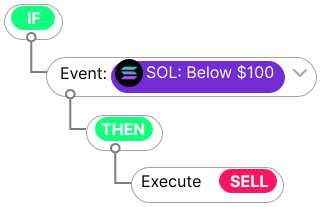
Every trigger and action is logged so you can review outcomes without guesswork. Use demo runs to validate logic, then deploy the same rules live when you trust the behavior.
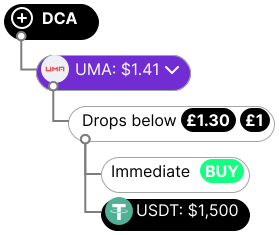
Uniswap execution must account for slippage and gas. Add spend limits, slippage caps, and cooldown windows so your bot does not trade aggressively during fast moves.
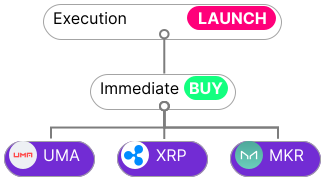
Rebalance between tokens using allocation bands and scheduled checks. When drift exceeds your threshold, the system can swap to bring weights back in line with your plan.



Use indicators and price logic for signals, then rely on session keys for scoped execution. This keeps permission boundaries tight while still enabling continuous automation.
Go LiveFAQ
 Lars H.
 Sofia R.
 Amara N.
 Chloe B.
 Jan K.
 Mika S.
Run slower checks if you prefer fewer decisions, or faster checks if you can monitor more. Consistency makes results comparable over time.

Keep conditions simple: one filter, one trigger, one exit plan. Too many signals can create fragility and constant tweaking.


Caps on spend, frequency, and exposure prevent accidental risk. Constraints also make strategies easier to maintain during volatile periods.

Pause rules during major events, then resume with the same structure after volatility settles. That balance keeps control in your hands while preserving consistency.

Review logs weekly, change one variable, and measure the impact. Routine improvements beat daily reactive edits.
Begin with a single pair and strict limits, then expand after you review behavior. Gradual scaling keeps DeFi automation understandable and manageable.
View Plans