



Turn discovery into a process
New Crypto Coins are exciting, but excitement is not a strategy. Build a watchlist, define entry and exit signals, and use strict sizing so you do not chase every listing.
Scan New Crypto Coins with a checklist: watchlist, signals, and rule-based entries and exits with strict caps, alerts and logs for consistent decisions.

410k+
users building automation
1.5M+
rule checks completed
1,000+
trading pairs
New Crypto Coins are exciting, but excitement is not a strategy. Build a watchlist, define entry and exit signals, and use strict sizing so you do not chase every listing.
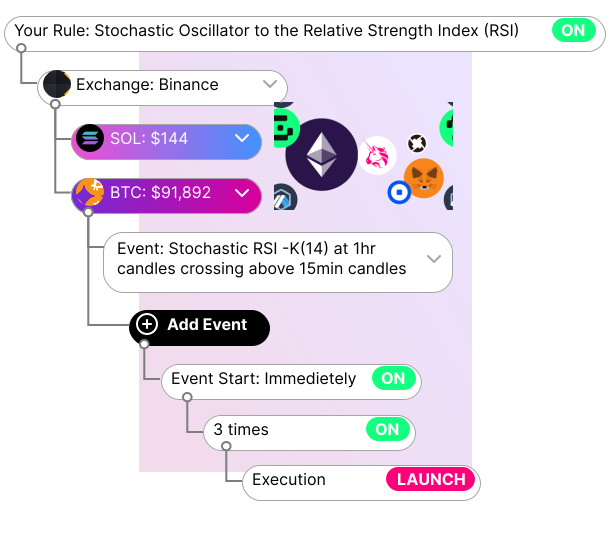
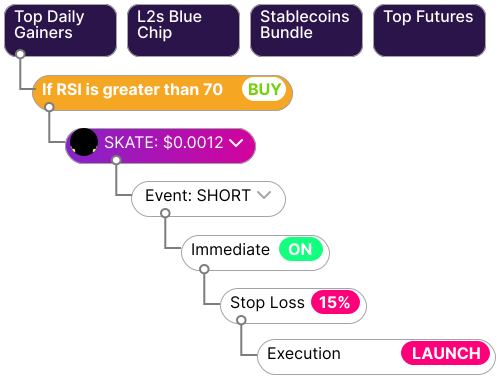
Use simple filters like trend direction, momentum and volatility. Keep indicators explainable so you can review outcomes and avoid overfitting to one lucky trade.
Define risk per trade, stop conditions, and exposure caps before you buy. Guardrails matter most when liquidity is thin and moves are fast.
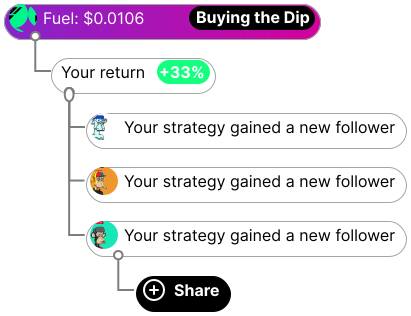
Alerts with context
Set alerts that fire only when conditions match, and include the next action. This keeps you focused on setups that fit your rules, not every price move.
Automate the routine
Once rules are clear, automate execution across Binance, Coinbase and Kraken, then review logs weekly. For related pages, see /what-crypto-to-buy-now and /crypto-predictions.

Market Leader Breakout
Enter when price breaks above a recent high with confirmation. Exit on trailing stop or risk cap. A systematic way to handle fast moves in new listings.

Golden Cross Trading
Use a long-term MA cross as a trend filter before entering. Exit on reverse cross or stop. Helps avoid buying into weak regimes.

MFI Oversold and Overbought
Buy when MFI signals capitulation and sell when MFI becomes overbought. Add a time stop. Keeps signals explainable for watchlist candidates.
Bollinger Band Below Price
Enter only when price deviates beyond a band and exit as it mean-reverts. Add a stop and cooldown. Useful when liquidity is thin and ranges form.
MACD Crossings
Enter after MACD confirms momentum, then exit when momentum fades. Add strict sizing. Helps avoid chasing one candle on new coins.
Market Leader Breakout
Enter when price breaks above a recent high with confirmation. Exit on trailing stop or risk cap. A systematic way to handle fast moves in new listings.
Golden Cross Trading
Use a long-term MA cross as a trend filter before entering. Exit on reverse cross or stop. Helps avoid buying into weak regimes.
MFI Oversold and Overbought
Buy when MFI signals capitulation and sell when MFI becomes overbought. Add a time stop. Keeps signals explainable for watchlist candidates.
Bollinger Band Below Price
Enter only when price deviates beyond a band and exit as it mean-reverts. Add a stop and cooldown. Useful when liquidity is thin and ranges form.
MACD Crossings
Enter after MACD confirms momentum, then exit when momentum fades. Add strict sizing. Helps avoid chasing one candle on new coins.
EMA Crossings with RSI
Enter on an EMA cross only when RSI confirms strength. Exit on crossback or trailing logic. Filters weak signals during noisy listing phases.

Buy the Dips
Accumulate after controlled pullbacks and take profit at preset levels. Use cooldowns. A simple approach for managing excitement around new coins.
Dip Recovery TWAP & RSI
Scale in using TWAP after an oversold signal, then exit as RSI normalizes. Add a volatility filter. Smooths entries when price is jumpy.
Moving Averages-Based Rebalancing
Rebalance a small watchlist to target weights on a schedule. Add drift thresholds. Keeps exposure intentional as new coins rotate.
Grid Trading
Run a grid on a liquid pair inside a defined range. Pause if conditions break. Useful once a new coin settles into a range.
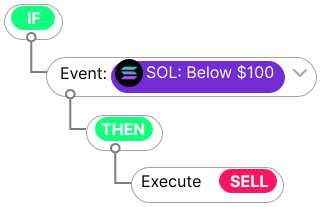
Decide maximum allocation per coin and a total cap for speculative positions. These rules prevent one new listing from dominating your risk.
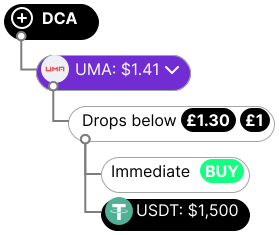
A shorter list improves decision quality. Track a handful of liquid candidates and automate checks, rather than scanning endlessly.
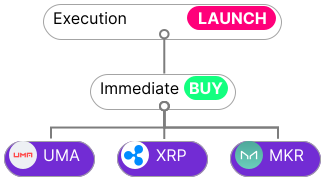
Use logs to see which signals worked and which did not. Change one variable at a time so learning stays clean.



When volatility spikes, reduce sizing and widen filters. A good process tightens risk instead of taking more random trades.
Build StrategyFAQ
 Zara Q.
 Thabo K.
 Elena D.
 Hyejin S.
 Mateo V.
 Bassem N.
Decide whether your workflow is daily, weekly, or intraday. A stable window prevents random switching between noise and longer-term signals.

Switching coins daily is a form of overtrading. Use criteria for when a coin leaves your watchlist.


Use fixed sizing rules and exposure caps. If you cannot explain your maximum risk, tighten limits until you can.

During major news, volatility can distort signals. Pause automation and return once conditions normalize.

Review logs weekly and change one variable. Routine improvements beat reactive edits after one trade.
Start with one watchlist rule, then expand after review. Gradual scaling keeps decisions consistent and manageable.
View Plans